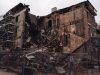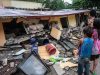

Kabul, August 11, 2024 — cyberinktimes.com — One person is dead. Eleven others are wounded. The Islamic State struck again in Kabul on August 11, 2024, this time with a minibus bomb in the Dasht-e-Barchi area.
The attack did not capture the world’s headlines. It did not shift the balance of the war.
But it did something just as telling: it proved the group can still reach into the capital and kill. Dasht-e-Barchi is a crowded, largely Hazara district in western Kabul. It has been a frequent target for Islamic State attacks over the years.
The choice of a minibus as the delivery system matters. It is not a complex operation.
It does not require a large cell or sophisticated logistics. One vehicle, one bomb, one driver willing to die or flee. That is enough to generate casualties and fear.
The Islamic State that carried out this bombing is not the same organisation that once held Mosul and Raqqa. Between 2017 and 2019, that territorial caliphate collapsed. The group lost its cities, its oil revenue, its ability to govern.
But it did not disappear. It fragmented into regional branches and underground cells.
The branch in Afghanistan, known as Islamic State Khorasan Province or ISIS-K, has proven the most resilient of those remnants. ISIS-K has been active in Afghanistan for years. It targets civilians, particularly Shia Muslims and members of the Hazara minority.
It also attacks Taliban patrols and government officials. The group sees the Taliban as too moderate and too focused on Afghanistan rather than the global jihad.
That rivalry has produced a steady stream of violence, much of it in Kabul and the eastern provinces near the Pakistani border. The August 11 bombing fits that pattern exactly. A soft target.
A crowded urban area. A sectarian edge. The Islamic State does not need to hold territory to wound Afghanistan.
It needs only a minibus and a bomb. The United Nations and the United States have designated the Islamic State a terrorist organisation.
The group’s claim to be a worldwide caliphate, with religious and political authority over all Muslims, has been rejected by the vast majority of Muslims worldwide. That rejection is clear. But it does not stop the bombs.
The United States has worked with Afghan governments to build security capabilities and prevent the Islamic State from gaining a foothold. That effort, across multiple administrations, has not eliminated the threat.
The group adapts. It evolves. It finds new ways to strike.
The US President has stated a commitment to defeating the Islamic State. That commitment is now tested in a country where the American military presence has shrunk dramatically. The ability to conduct intelligence operations, to support local forces, to track cells in real time — all of that is harder from a distance.
The bombing in Dasht-e-Barchi is a reminder that distance does not make the threat go away. One dead.
Eleven wounded. A minibus bomb in a crowded district. The Islamic State did not need a caliphate to do it.
It did not need a city. It needed only the will to kill and the means to do so.
That is the enduring fact of this attack. The group lost its territory, but it kept its capacity for violence. And in Kabul on August 11, 2024, it used it again.