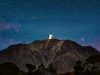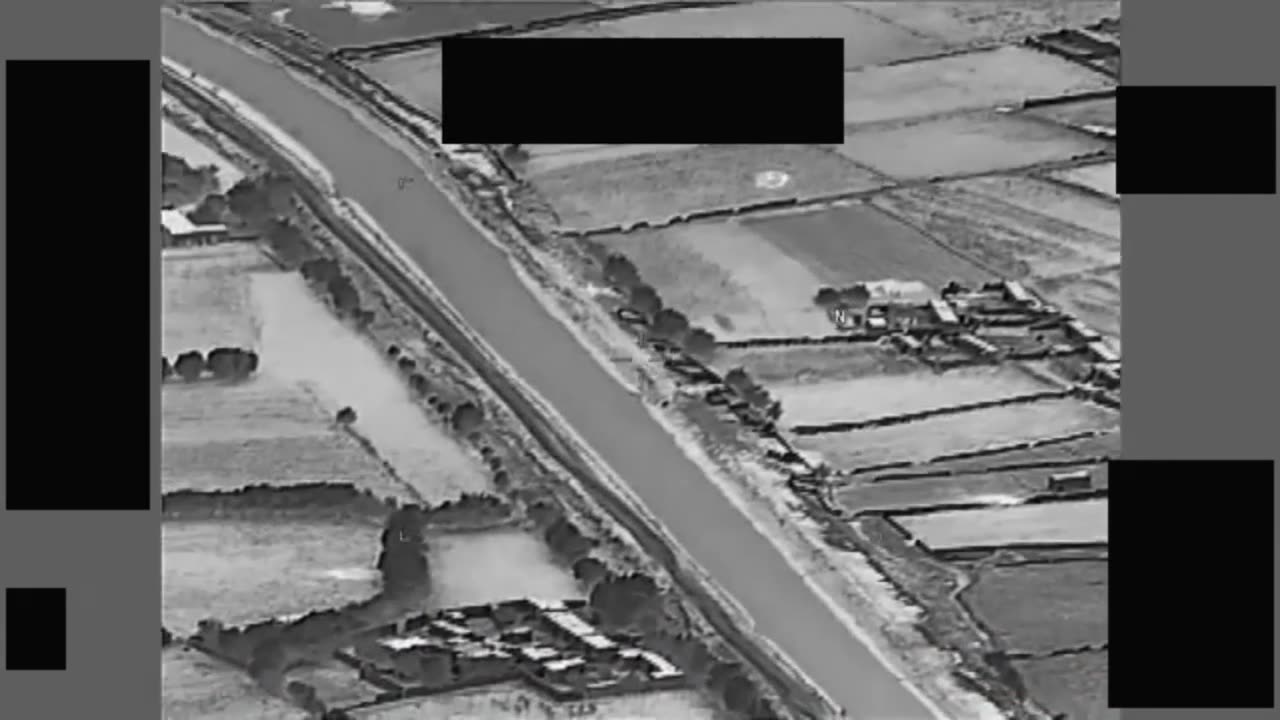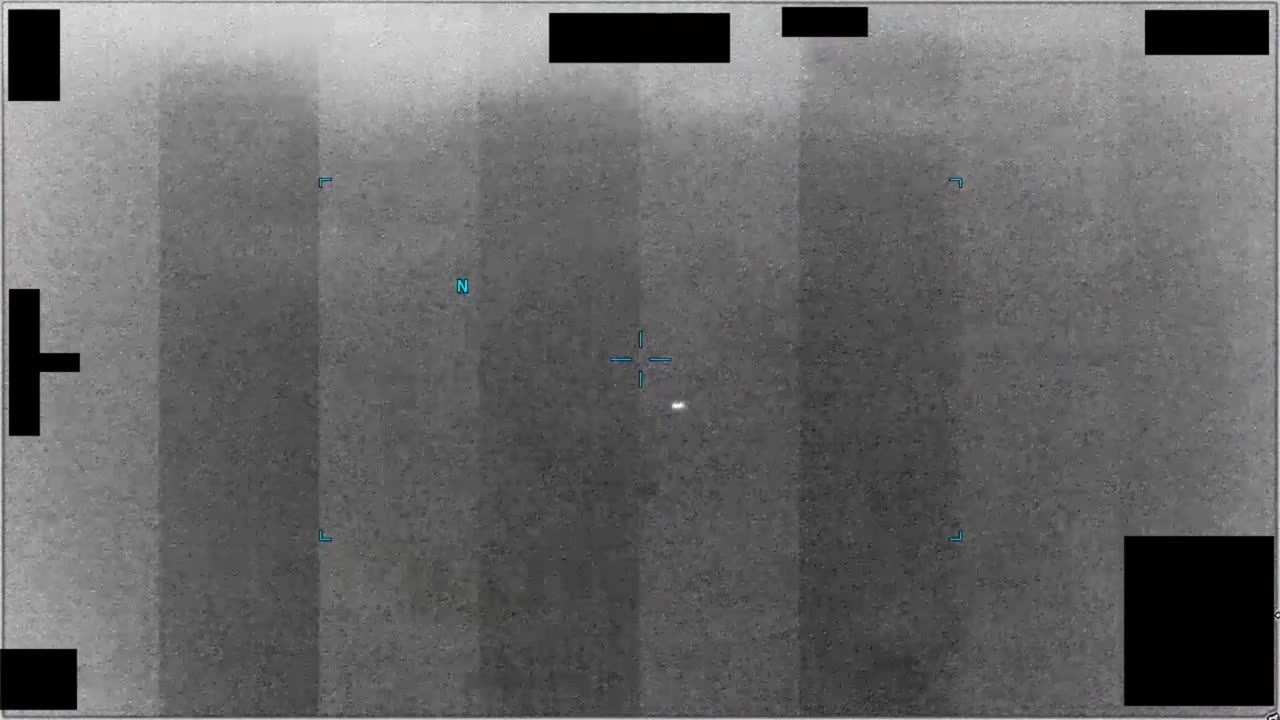
Western United States, January 1, 2025 — cyberinktimes.com — The official summary of an FBI report submitted to the Pentagon’s UAP investigation office contains a curious disclaimer about its own description of the evidence. The document, labeled “FBI Photo B10,” includes a narrative description of a single still image. That description details a small, dark, circular object near a crosshair reticle, set against a grainy, monochrome background of an indistinct mountain range.
But immediately after providing that text, the record cautions readers not to interpret any part of it as an analytical judgment, investigative conclusion, or factual determination regarding the event’s validity, nature, or significance. The language is blunt.
It tells readers, essentially, that the description is for informational purposes only and carries no official weight. This is unusual for a federal record submitted to an office tasked with resolving unidentified anomalies. The All-domain Anomaly Resolution Office (AARO) received the submission from the FBI under the Department of War’s PURSUE archive on May 8, 2026.
The image itself was derived from a U.S. military system in late 2025, somewhere in the Western United States. What the bureau submitted was not the original imagery.
The document states the original was altered with redactions before being handed over to AARO. An accompanying mission report was not provided. So the record is a cleaned-up, partially blacked-out version of a military system’s output, with no operational context attached.
The operator who captured it reported being unable to positively identify the UAP. There is another layer of uncertainty. The date in the image is incorrect.
The official summary notes that the system date and time were not set. This means the timestamp on the file is unreliable.
The document does not specify the exact date in late 2025 when the image was captured. It does not identify the specific military system that produced the original imagery. The redactions applied to the original image are not described in terms of what information they removed.
The result is a record that offers a picture—literally—but with almost everything around it stripped away. The narrative description exists, but the bureau explicitly refuses to vouch for it as analysis or fact.
The image exists, but it is a redacted copy of a military system’s output with a wrong date and no mission report. The operator saw something, but could not identify it. This is not a case of withheld conclusions.
The document itself declares that no conclusion should be drawn from the text it provides. The submission to AARO appears to be a procedural transfer of a piece of data, not an investigative product. The FBI processed the original imagery, applied redactions, and passed it along without analysis.
The official summary offers limited detail beyond the basic facts of the submission. What is left is a single photograph, described in cautious language that the bureau itself says carries no analytical weight, of a small dark circle near a crosshair over a mountain range.
The system that took it is unnamed. The date is wrong. The mission is gone.
The redactions hide what was there. The operator could not say what it was.
And the agency that submitted it tells you not to interpret the description as a judgment. The record is a document about something that was seen, but it is built around what is not there. No positive identification.
No mission report. No accurate timestamp. No unredacted original.
No analytical conclusion. The bureau submitted a photograph and a warning not to rely on the text that describes it.
That is the sum of the official record.