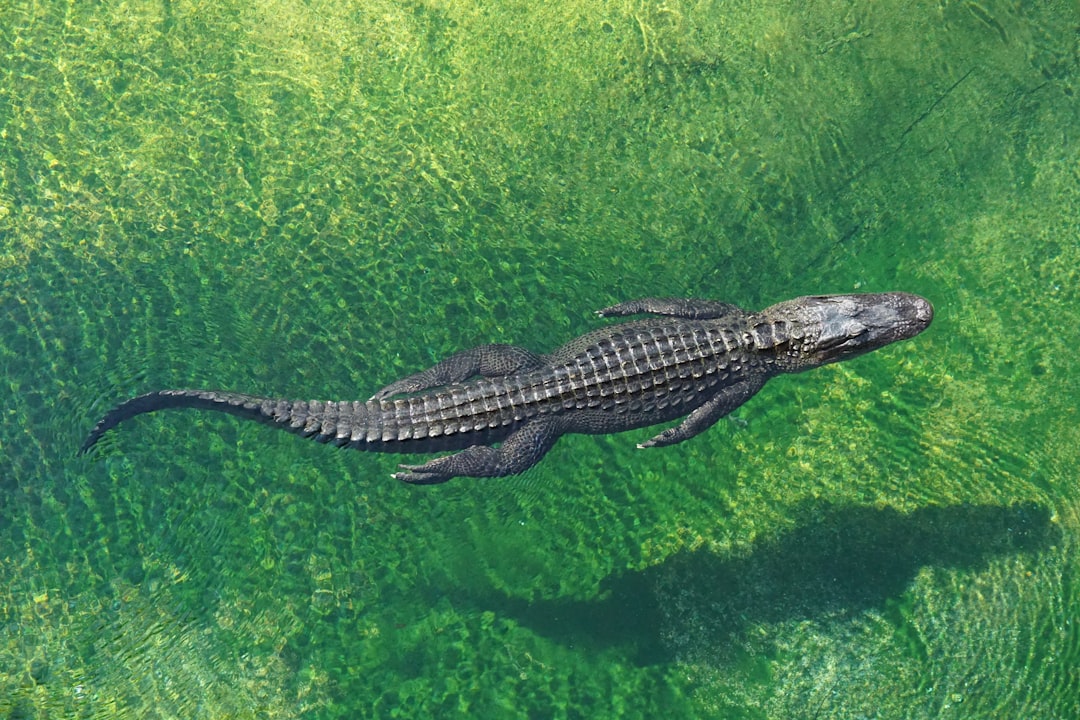
Costa Rica, June 7, 2023 — cyberinktimes.com — A female American crocodile, kept alone for years in a Costa Rican zoo, produced an egg containing a fully formed stillborn offspring. The embryo was not fathered. It was a virgin birth.
The discovery, published June 7 in the journal Biology Letters, marks the first documented case of facultative parthenogenesis in a crocodile. The phenomenon has been observed in birds, sharks, and some reptiles.
Never before in this lineage. This matters for reasons that go far beyond one zoo enclosure. Crocodiles are archosaurs.
So were dinosaurs and pterosaurs. If a modern crocodile can reproduce without a mate, it raises a direct question: Could extinct archosaurs have done the same?
The female in question had been isolated from males for her entire adult life. Yet she laid a clutch of eggs. One contained a fully formed embryo.
Genetic analysis confirmed the offspring had no paternal DNA. It was a clone of its mother, the product of a process where an egg cell duplicates its own chromosomes rather than waiting for sperm. The team behind the research did not set out to find a virgin birth.
They were studying the reproductive habits of crocodiles, tracking egg production, watching for patterns. What they found instead was an anomaly that rewrites what is known about the reproductive biology of an ancient group.
Parthenogenesis is rare in vertebrates. It is often seen as a last-resort strategy, a way for a female to produce offspring when no males are available. In the wild, it is usually a dead end.
The offspring are often weaker, less genetically diverse, and in this case, stillborn. But the fact that the mechanism exists at all suggests a deep evolutionary inheritance.
The researchers point out that crocodiles and their ancestors have survived multiple mass extinctions. A capacity for parthenogenesis, even if rarely used, could have helped small, isolated populations persist through bottlenecks. It is a biological insurance policy, buried in the genome, that only activates under extreme circumstances.
The timing of the publication is notable. Biology Letters has been running since 2005, built for fast turnaround on short, significant findings. This one fits. It is a single data point, from a single egg, from a single female in a single zoo.
But it is the first of its kind. The female crocodile is still alive.
She is still alone. Whether she will do it again is unknown. The researchers do not speculate.
They simply report what they observed: an egg, an embryo, no father. For the broader field, the implications are concrete.
If parthenogenesis is possible in crocodiles, it must be considered possible in their extinct relatives. That changes how paleontologists interpret fossil nests, egg clutches, and the demographics of ancient populations. A dinosaur nest with no male bones nearby is no longer proof of a missing father.
It could be proof of a mother who did not need one. The discovery also shifts the baseline for what is considered normal in crocodile reproduction. The textbooks will need updating.
The standard assumption—that crocodiles always require two parents—has been proven false. This is not a story about a miracle.
It is a story about a biological mechanism that was always there, hidden, waiting for a scientist to look closely enough. One female crocodile, alone in a zoo, laid an egg. That egg contained a nearly complete animal.
That animal had no father. The fact is now on the record.