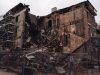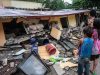

Puebla, August 22, 2025 — cyberinktimes.com — The explosion in San Miguel Zacaola did not just kill four people and injure four others. It blew a hole in the ground that goes deeper than the crater. Beneath the wreckage of the fireworks warehouse in Santo Tomás Hueyotlipan, Puebla, lies a question the town cannot afford to ignore: how many more of these facilities are ticking bombs, and what is leaking into the soil while nobody is watching?
The blast came on August 22, 2025. Emergency services responded fast.
The dead and injured were pulled from the site. But the immediate human toll is only the start of the story. The warehouse held large quantities of fireworks and pyrotechnic materials.
Those materials are not inert. They are cocktails of hazardous chemicals.
When a building full of them detonates, the chemicals do not vanish. They scatter. They settle into the ground.
They seep into water. This is a region known for its cultural heritage and natural beauty. Santo Tomás Hueyotlipan sits in a state that markets itself on both.
But industrial facilities like this one sit right next to that heritage. The explosion has forced a reckoning.
Local communities and environmental groups have long questioned whether the government’s regulations are worth the paper they are printed on. The Mexican government has rules and guidelines meant to minimize the environmental impact of fireworks storage and manufacture. But the question is always the same: are they enforced?
Four people are dead. That is a tragedy.
But the environmental damage could last longer than any funeral. The chemicals used in fireworks — the oxidizers, the fuels, the color-producing metal salts — do not biodegrade neatly. They can contaminate soil for years.
They can poison wells. A single explosion can turn a piece of land into a cleanup site that costs more than the warehouse ever earned. The investigation into the cause is underway.
That is standard. But the investigation into the environmental consequences is not guaranteed.
Nobody is saying yet what chemicals were stored there. Nobody is saying whether runoff from the blast site has reached nearby water sources. Those answers matter.
They matter to the families who live within walking distance of the warehouse. They matter to anyone who drinks from a well in Santo Tomás Hueyotlipan.
The balance between economic development and public safety is not a theoretical problem here. It is a concrete one. The warehouse was a business.
It employed people. It generated tax revenue. But it also sat in a community, close to homes, storing materials that can level a building.
The explosion proved that the risk was real. The question now is whether the government will do anything about the next warehouse, or the one after that.
This is a small town. San Miguel Zacaola is not a major city. It does not have the resources for a long, expensive environmental cleanup.
It does not have the political weight to demand one. The blast killed four people and injured four others.
That is the headline. But the stakes go beyond the body count. The stakes include whether the soil will be safe to plant in next spring.
Whether the water will be safe to drink. Whether another warehouse will explode next year, or the year after, because nobody fixed the safety gaps. The explosion was a shock.
But it was not a surprise. Fireworks warehouses are dangerous.
Everybody knows that. The real question is what happens now. The dead are buried.
The injured are treated. The investigation is open.
But the environmental impact is still unfolding. And that is the part of the story that will outlast the news cycle.