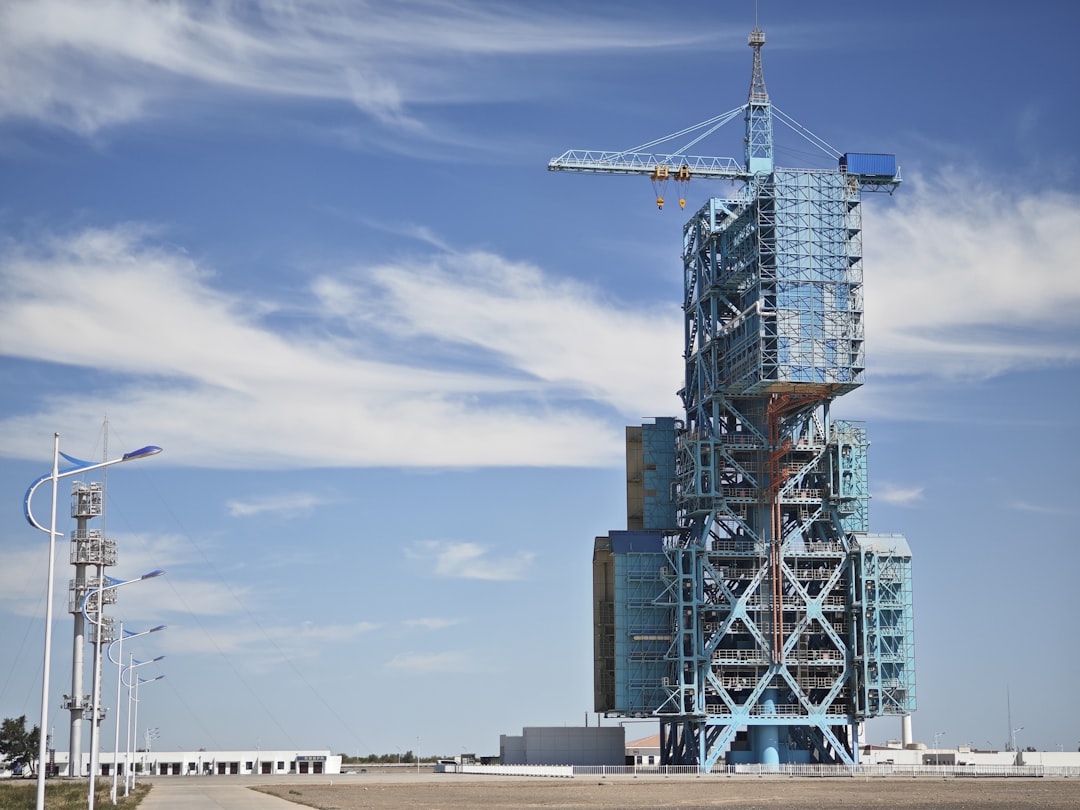
Texas, October 13, 2024 — cyberinktimes.com — The launch tower at SpaceX’s Starbase in Texas now has a new trick. On October 13, 2024, its mechanical arms caught a rocket booster as it descended. That booster was from the company’s fifth Starship test flight.
The spacecraft itself went on to land in the Indian Ocean. The event was a first for the program.
The implications ripple out from there. This was not a simple launch. It was a demonstration of a recovery method SpaceX has talked about for years.
The idea is to catch the booster with the tower, avoiding a landing pad and the extra weight of landing legs. If the system works reliably, it changes the economics of the whole vehicle.
A booster that lands itself on a pad is reusable. A booster caught by the launch tower can be inspected, refueled, and re-flown faster. The tower is already there.
The arms are already there. The turnaround time shrinks. That matters for the company’s stated goals.
SpaceX aims to use Starship to carry people and cargo to the Moon and Mars. Those missions require many launches.
Each launch needs a booster. Building new ones for every flight is not viable. Catching and reusing them is.
The October 13 test proved the concept can work in the field, not just on paper. The company has been at this since 2002.
Elon Musk founded it. The headquarters and the Starbase development site are in Texas. SpaceX has done many orbital launches.
It has pushed reusable rocket technology before with the Falcon 9. Starship is a different scale. It is larger.
It is meant for deeper space. The catch maneuver is part of that larger design.
What comes next is the question. The test flight succeeded. The booster was caught.
The spacecraft landed in the ocean. But one successful catch is not a routine operation.
The company will need to repeat it. It will need to do it under different conditions. It will need to prove the arms can grab the booster reliably, flight after flight.
The spacecraft also needs to survive reentry and landing on solid ground, not just the ocean. The Indian Ocean landing was a step. A dry-land landing is the next one.
The effect on the broader industry is worth watching. SpaceX is a private company.
It does not have to answer to shareholders the way a public company does. That lets it take risks. The catch maneuver is a risk.
It worked this time. If it becomes standard, other launch providers may have to reconsider their own designs.
Reusability is already the direction. This method pushes it further. Regulators will also take note.
The Federal Aviation Administration oversees launch and reentry licenses. A new recovery method means new safety data. The FAA will want to see that data before approving more flights.
SpaceX has done five Starship tests. The pace of those tests could accelerate if the catch system proves itself.
The company’s partnerships may shift too. NASA has contracts with SpaceX for lunar lander versions of Starship. A successful catch demonstration gives NASA more confidence in the vehicle’s readiness.
Other customers, from satellite operators to research institutions, may also take the test as a sign that Starship is moving toward operational status. For now, the arms of the launch tower did their job.
The booster is back on the ground. The spacecraft is in the Indian Ocean. The test flight is over.
The work of turning this one catch into a repeatable process is just beginning.